 minukma@cs.ubc.ca
 LinkedIn
 GitHub
 CV
CV Google Scholar
EpitopeGen
Generative epitope modeling to identify antigen-specific T-cell groups from immune repertoires. Developed with W. Tu, C. Vasquez-Rios, and J. Ding, this work connects sequence modeling with questions about immune recognition.
PhD researcher · University of British Columbia
I am a PhD student in Computer Science at the University of British Columbia, advised by Jiarui Ding. My research focuses on foundation models for immunology, computational protein engineering, and AI agents for scientific discovery.
Before joining UBC, I worked as a research scientist at Lunit on AI for digital pathology. I received my master’s and bachelor’s degrees from KAIST.

Generative epitope modeling to identify antigen-specific T-cell groups from immune repertoires. Developed with W. Tu, C. Vasquez-Rios, and J. Ding, this work connects sequence modeling with questions about immune recognition.
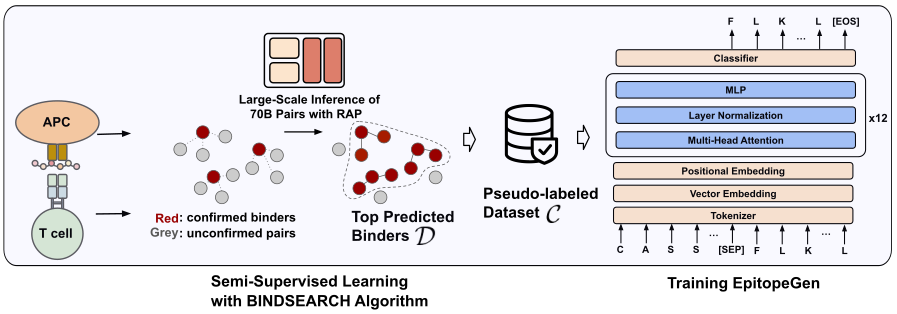
Single-cell TCR sequencing enables high-resolution analysis of T Cell Receptor (TCR) diversity and clonality, offering valuable insights into immune responses and disease mechanisms. However,...
Single-cell TCR sequencing enables high-resolution analysis of T Cell Receptor (TCR) diversity and clonality, offering valuable insights into immune responses and disease mechanisms. However, identifying cognate epitopes for individual TCRs requires complex and costly functional assays. We address this challenge with EpitopeGen, a largescale transformer model based on the GPT-2 architecture that generates potential cognate epitope sequences directly from TCR sequences.
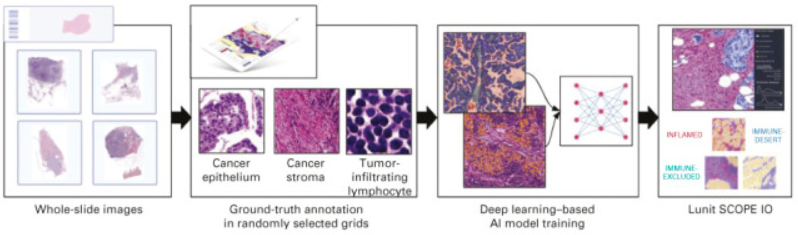
Biomarkers on the basis of tumor-infiltrating lymphocytes (TIL) are potentially valuable in predicting the effectiveness of immune checkpoint inhibitors (ICI). However, clinical application...
Biomarkers on the basis of tumor-infiltrating lymphocytes (TIL) are potentially valuable in predicting the effectiveness of immune checkpoint inhibitors (ICI). However, clinical application remains challenging because of methodologic limitations and laborious process involved in spatial analysis of TIL distribution in whole-slide images (WSI).
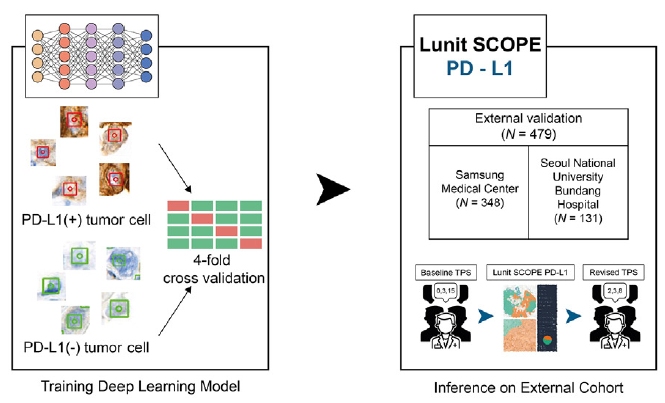
This study explored the role of artificial intelligence (AI)-powered TPS analyser in minimisation of interobserver variation and enhancement of therapeutic response prediction.
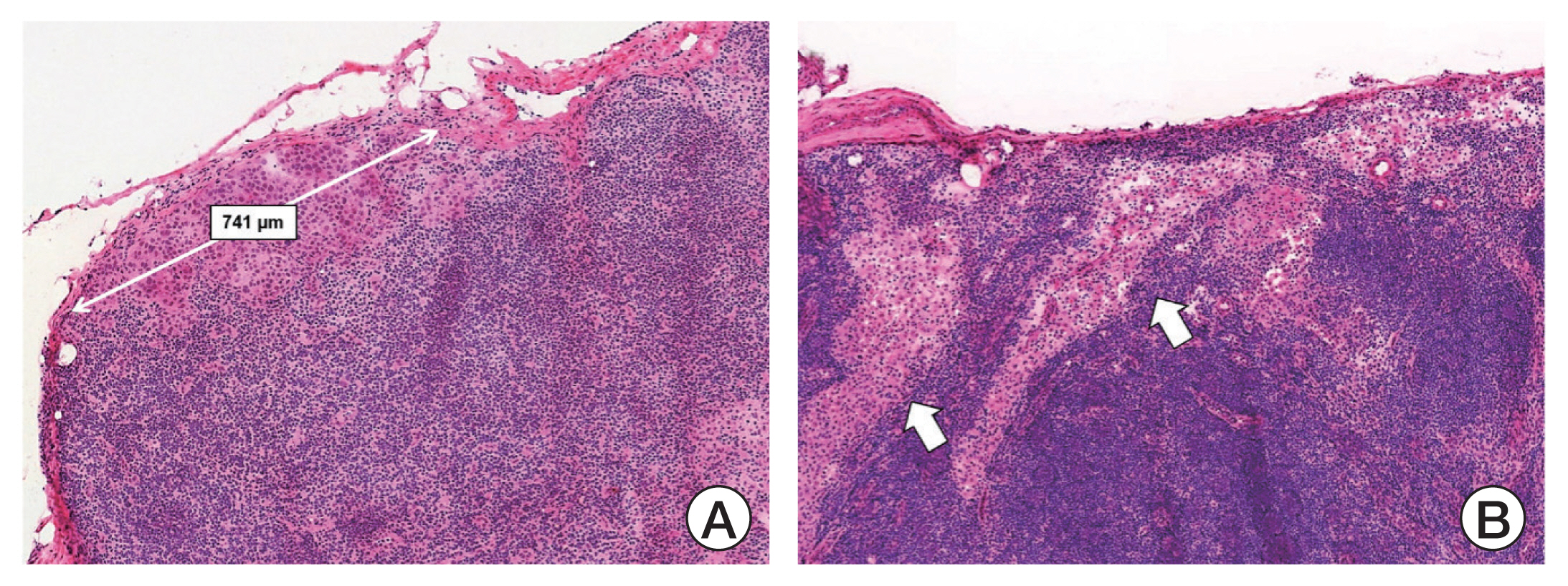
Assessing the metastasis status of the sentinel lymph nodes (SLNs) for hematoxylin and eosin–stained frozen tissue sections by pathologists is an essential but tedious and time-consuming task that...
Assessing the metastasis status of the sentinel lymph nodes (SLNs) for hematoxylin and eosin–stained frozen tissue sections by pathologists is an essential but tedious and time-consuming task that contributes to accurate breast cancer staging. This study aimed to review a challenge competition (HeLP 2019) for the development of automated solutions for classifying the metastasis status of breast cancer patients.
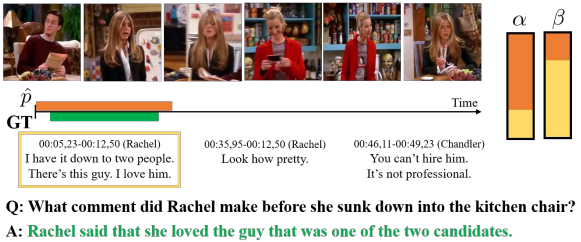
This paper proposes the progressive attention memory network (PAMN) for movie story question answering (QA). Movie story QA is challenging compared to VQA in two aspects:(1) pinpointing the...
This paper proposes the progressive attention memory network (PAMN) for movie story question answering (QA). Movie story QA is challenging compared to VQA in two aspects:(1) pinpointing the temporal parts relevant to answer the question is difficult as the movies are typically longer than an hour,(2) it has both video and subtitle where different questions require different modality to infer the answer. To overcome these challenges, PAMN involves three main features:(1) progressive attention mechanism that utilizes cues from both question and answer to progressively prune out irrelevant temporal parts in memory,(2) dynamic modality fusion that adaptively determines the contribution of each modality for answering the current question, and (3) belief correction answering scheme that successively corrects the prediction score on each candidate answer. Experiments on publicly available benchmark datasets, MovieQA and TVQA, demonstrate that each feature contributes to our movie story QA architecture, PAMN, and improves performance to achieve the state-of-the-art result. Qualitative analysis by visualizing the inference mechanism of PAMN is also provided.
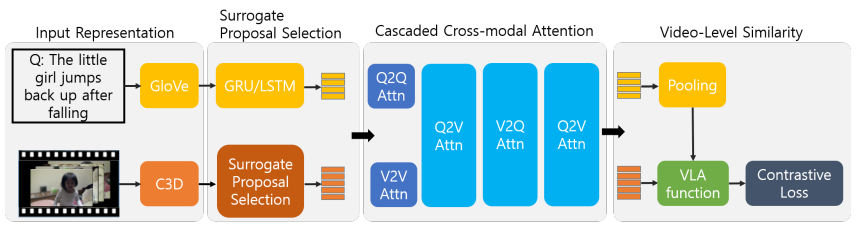
This paper considers a network referred to as Modality Shifting Attention Network (MSAN) for Multimodal Video Question Answering (MVQA) task. MSAN decomposes the task into two sub-tasks:(1)...
This paper considers a network referred to as Modality Shifting Attention Network (MSAN) for Multimodal Video Question Answering (MVQA) task. MSAN decomposes the task into two sub-tasks:(1) localization of temporal moment relevant to the question, and (2) accurate prediction of the answer based on the localized moment. The modality required for temporal localization may be different from that for answer prediction, and this ability to shift modality is essential for performing the task. To this end, MSAN is based on (1) the moment proposal network (MPN) that attempts to locate the most appropriate temporal moment from each of the modalities, and also on (2) the heterogeneous reasoning network (HRN) that predicts the answer using an attention mechanism on both modalities. MSAN is able to place importance weight on the two modalities for each sub-task using a component referred to as Modality Importance Modulation (MIM). Experimental results show that MSAN outperforms previous state-of-the-art by achieving 71.13% test accuracy on TVQA benchmark dataset. Extensive ablation studies and qualitative analysis are conducted to validate various components of the network.
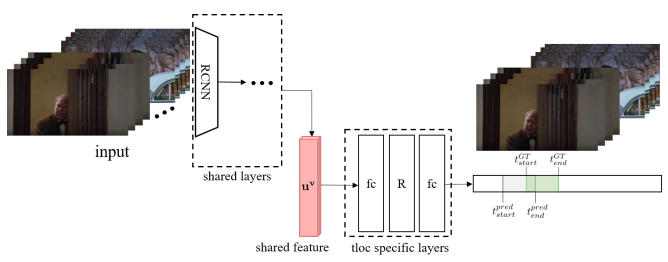
This paper proposes a method to gain extra supervision via multi-task learning for multi-modal video question answering. Multi-modal video question answering is an important task that aims at the...
This paper proposes a method to gain extra supervision via multi-task learning for multi-modal video question answering. Multi-modal video question answering is an important task that aims at the joint understanding of vision and language. However, establishing large scale dataset for multi-modal video question answering is expensive and the existing benchmarks are relatively small to provide sufficient supervision. To overcome this challenge, this paper proposes a multi-task learning method which is composed of three main components: (1) multi-modal video question answering network that answers the question based on the both video and subtitle feature, (2) temporal retrieval network that predicts the time in the video clip where the question was generated from and (3) modality alignment network that solves metric learning problem to find correct association of video and subtitle modalities. By …